
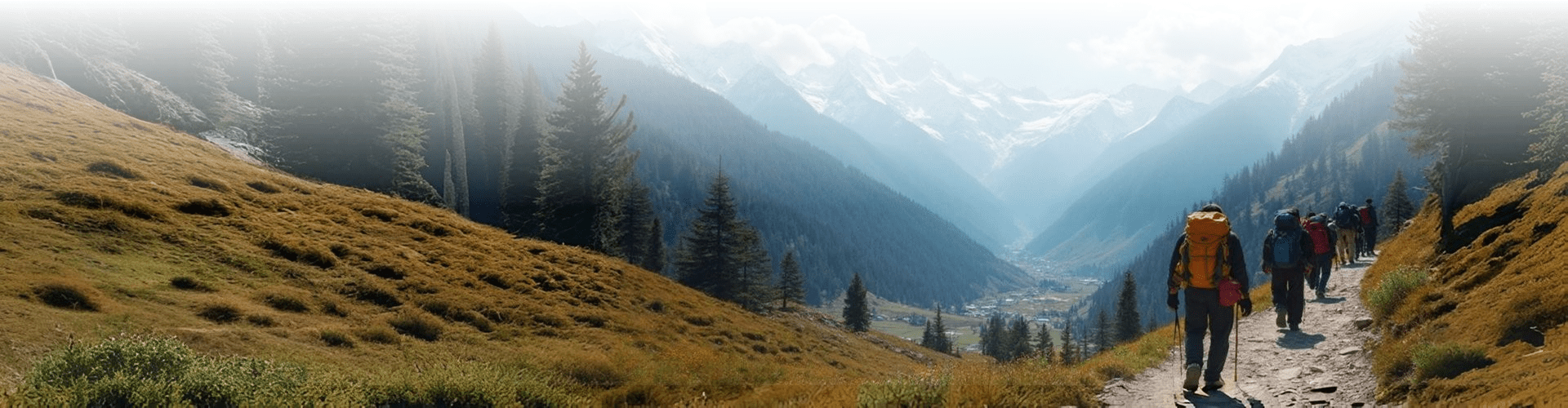
Char Dham Yatra
Char Dham Yatra Includes
Yamunotri
Gangotri
Kedarnath
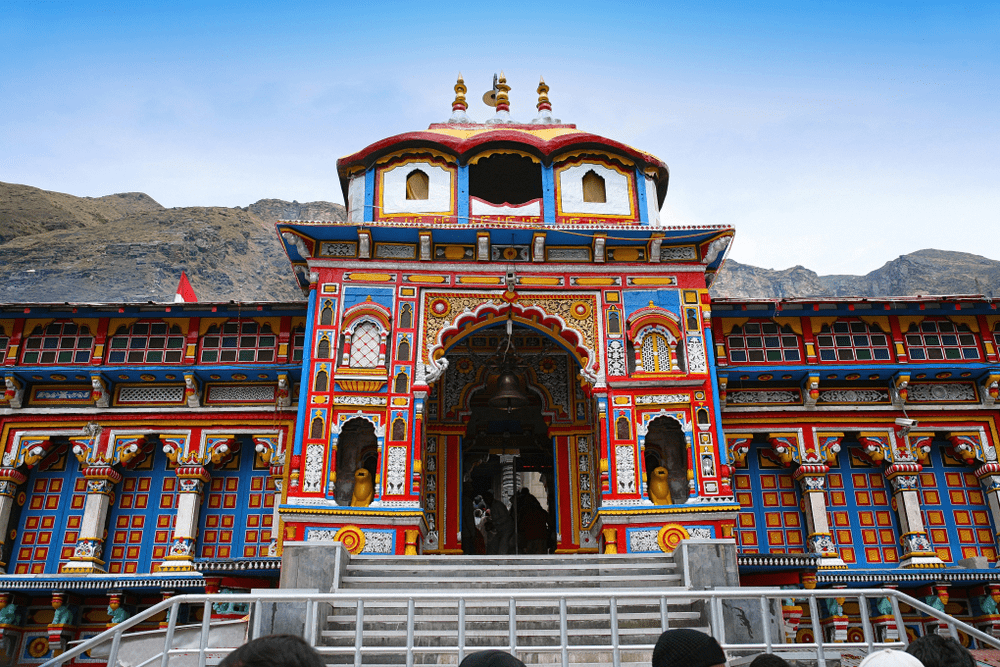
Badrinath
About Char Dham Yatra 2025
Char Dham Yatra pilgrims from around India, in 3 days, jumped to 1.5 lakhs since May 10, 2024 —a figure showing a 61% rise from 2023. Why so? It’s all because of the 4-holy shrines in the lapse of the Indian Himalayas in Uttarakhand, the Devbhoomi. These 4-holy Dhams (pilgrimage sites) together make for the Char Dham Yatra, not to be confused with the around India Char Dham Yatra (including Badrinath Dham, Rameshwaram Dham, Jagannath Puri Dham, and Dwarka Dham).
The Char Dham circuit within the northern state of Uttarakhand is also called Chota Char Dham. It has no relation to the Char Dham Yatra commenced by Adi Shankaracharya in the 8th century. The pilgrimage sites in the Char Dham Yatra within Uttarakhand are Yumnotri Dham, Gangotri Dham, Kedarnath Dham, and Badrinath Dham. They each have religious significance for the Hindu devotees who visit and offer prayers to the established God.
The Char Dham Yatra is famous among Hindu devotees because of its religious significance. The other inspiration to go on a Char Dham Yatra is an associated belief that one’s spirit gets Salvation (Moksha) on visiting these religious shrines. In Hindu Mythology, the Aatma (a person’s spirit) lives many mortal lives before attaining Salvation (becoming one with God). Devotees visit these 4 Dhams to free their spirits from the cycle of ‘birth’ and ‘death’ and find eternal peace.
These four sacred sites of Uttarakhand, till the 1950s, were out of reach for the devotees among the commoners. The route there was very strenuous and was often taken by Sadhus (Hindu monks) or people capable of taking entourages. After the Indo-China War in 1962, the government started building motorable routes to Himalayan borders. This initiative made these Dhams accessible to the commoners. Every year, the Uttarakhand government builds more facilities to make the Char Dham Yatra comfortable and safe for all the devotees. The services that the government is continuously improving are:
- Housing Services.
- Rescue Services.
- Healthcare Services.
Uttarakhand is a beautiful state with its share of mesmerizing Himalayas. The 4-pilgrimage sites (Dhams) of the Char Dham Yatra are all in the Himalayas therefore are only open from summer (April or May) till post-monsoon (October or November) season. The routes to these sites close during the winter, wherein the idols are kept and worshiped in winter stays dedicated to these idols. These idols are there till the Kiwads (doors) to the Char Dhams open again in summer.
Note: The Char Dham Yatra completes clockwise, from the west to the east. The most popular trail for Char Dham is:
Haridwar → Rishikesh → Devprayag → Tehri → Dharasu → Yamunotri → Uttarkashi → Gangotri → Gaurikund → Kedarnath → Joshimath → Badrinath.
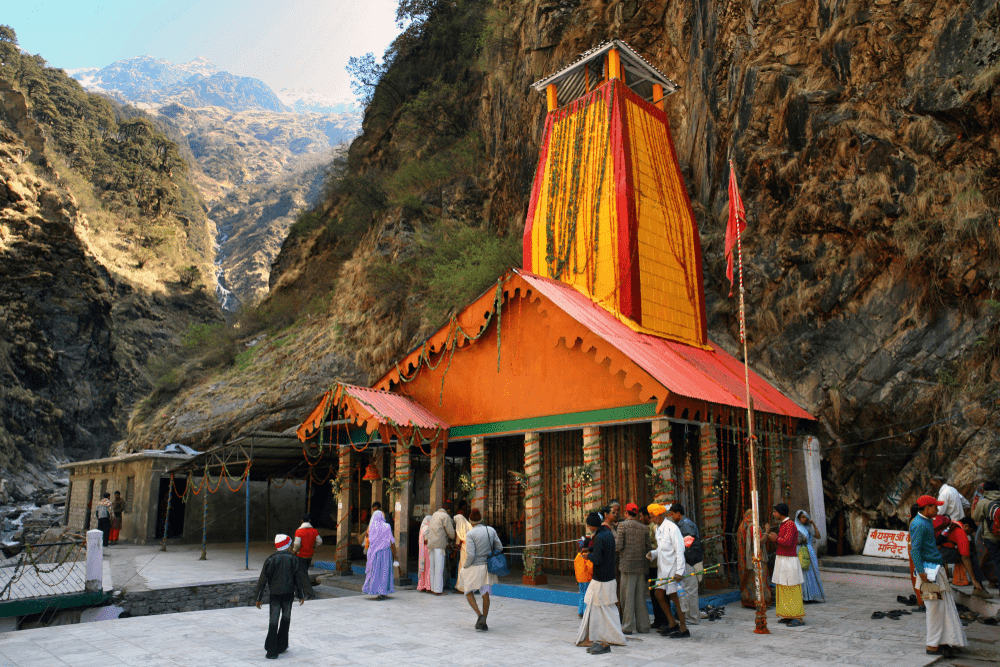
Yamunotri Dham
- Deity: Goddess Yamuna
- Winter Abode: Kharsali (Khushimath)
- Trek: 6 km (Janki Chatti to Yamunotri)
- Nearest Helipad: Kharsali (5 km trek to Yamunotri)
- Altitude: 3,293m (10,804 ft)
- Distinction: Source of the Yamuna River
To Visit: Kharsali, Divya Shila, Saptrishi Kund, Barkot, Surya Kund, Hanuman Chatti, Yamunotri Temple, and Janki Chatti.
Peaks In Vicinity: Kalind Parbat, Bandarpoonch, Swargarohini, and Kalanag Peak.
Yamunotri Dham is the first of the Char Dhams in the Char Dham Yatra. It is the abode of Goddess Yamuna. She is the daughter of Surya Dev and the sister of Yama and Shani Dev. Bathing in Yamuna’s waters is believed to be sin-rinsing. Devotees also believe that it helps you escape untimely death. Yamunotri Dham is also the source of River Yamuna, the second pious river in Hindu Mythology.
The Char Dham circuit within the northern state of Uttarakhand is also called Chota Char Dham. It has no relation to the Char Dham Yatra commenced by Adi Shankaracharya in the 8th century. The pilgrimage sites in the Char Dham Yatra within Uttarakhand are Yumnotri Dham, Gangotri Dham, Kedarnath Dham, and Badrinath Dham. They each have religious significance for the Hindu devotees who visit and offer prayers to the established God.
The Char Dham Yatra is famous among Hindu devotees because of its religious significance. The other inspiration to go on a Char Dham Yatra is an associated belief that one’s spirit gets Salvation (Moksha) on visiting these religious shrines. In Hindu Mythology, the Aatma (a person’s spirit) lives many mortal lives before attaining Salvation (becoming one with God). Devotees visit these 4 Dhams to free their spirits from the cycle of ‘birth’ and ‘death’ and find eternal peace.
These four sacred sites of Uttarakhand, till the 1950s, were out of reach for the devotees among the commoners. The route there was very strenuous and was often taken by Sadhus (Hindu monks) or people capable of taking entourages. After the Indo-China War in 1962, the government started building motorable routes to Himalayan borders. This initiative made these Dhams accessible to the commoners. Every year, the Uttarakhand government builds more facilities to make the Char Dham Yatra comfortable and safe for all the devotees. The services that the government is continuously improving are:
- Housing Services.
- Rescue Services.
- Healthcare Services.
Uttarakhand is a beautiful state with its share of mesmerizing Himalayas. The 4-pilgrimage sites (Dhams) of the Char Dham Yatra are all in the Himalayas therefore are only open from summer (April or May) till post-monsoon (October or November) season. The routes to these sites close during the winter, wherein the idols are kept and worshiped in winter stays dedicated to these idols. These idols are there till the Kiwads (doors) to the Char Dhams open again in summer.
Note: The Char Dham Yatra completes clockwise, from the west to the east. The most popular trail for Char Dham is:
Haridwar → Rishikesh → Devprayag → Tehri → Dharasu → Yamunotri → Uttarkashi → Gangotri → Gaurikund → Kedarnath → Joshimath → Badrinath.
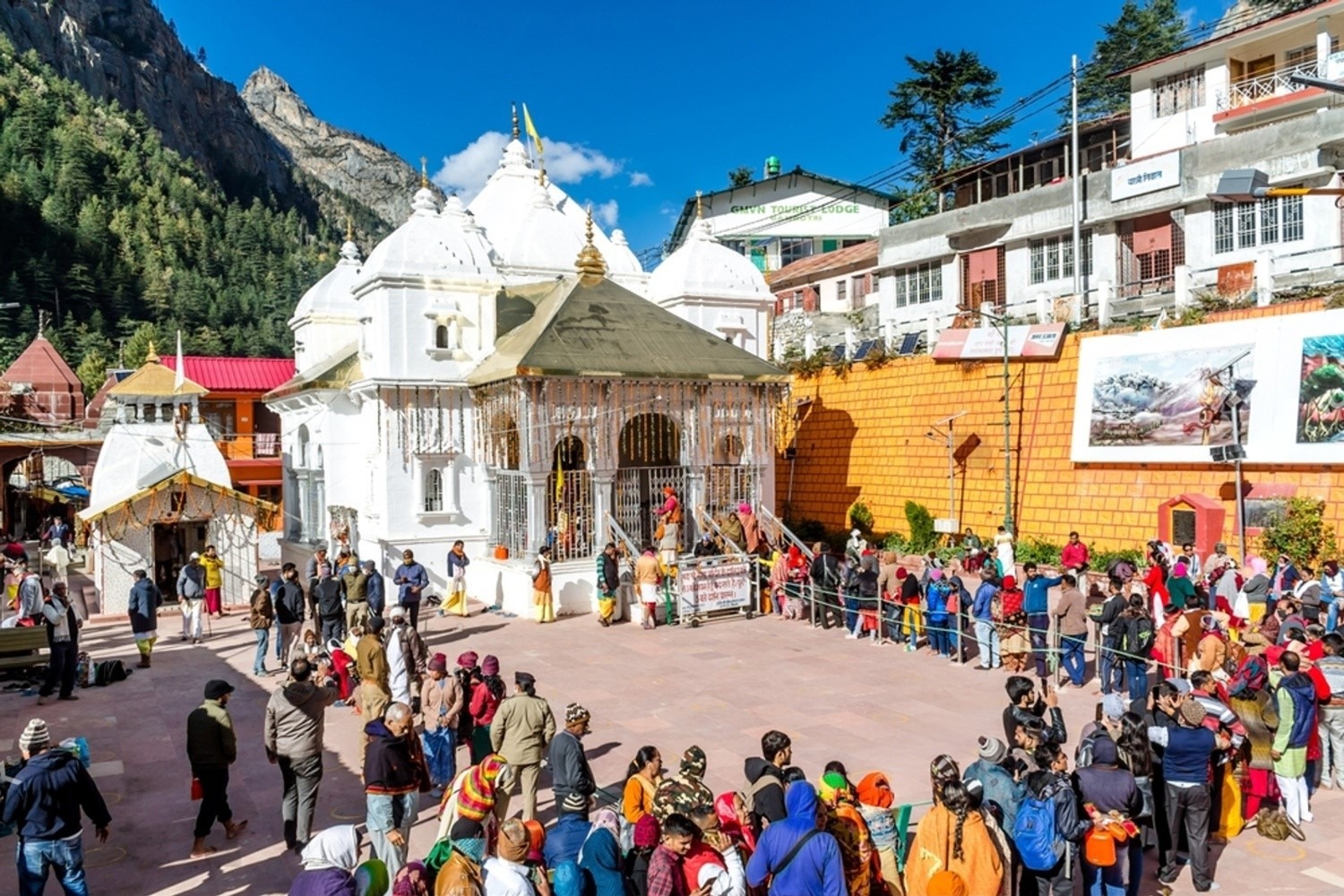
Gangotri Dham
- Deity: Goddess Ganga
- Winter Abode: Mukhwa
- Trek: 0 km (Road goes up to Gangotri Dham)
- Nearest Helipad: Harsil (25 km drive to Gangotri)
- Altitude: 3,200 m (10,499 ft)
- Distinction: Origin of River Ganges (Maa Ganga)
To Visit: Pandava Gufa, Gangotri National Park, Gangotri Temple, Harsil, Gauri Kund, Surya Kund, Dharali, Bhagirathi Shila, Kedartal, Tapovan, Jalmagna Shivling, Vishwanath Temple, and Gaumukh.
Peaks In Vicinity: Chaukhamba III, Chaukhamba II, Chaukhamba I, Kedarnath Main, and Satopanth.
Gangotri Dham, as the name implies, is home to Goddess Ganga. Maa Ganga (River Ganges), the purest river in Hindu mythology, originates from Gangotri. Here, the river is known by the name Bhagirathi, commemorating a king who, after ages of penance, pleased Ganga and freed his ancestors.
Gangotri Dham is visited second in the Char Dham Yatra, following the ancient tradition of going West to East. Devotees visit here to attain Salvation (moksha). If not equivalent to King Bhagirath, then something near to it.
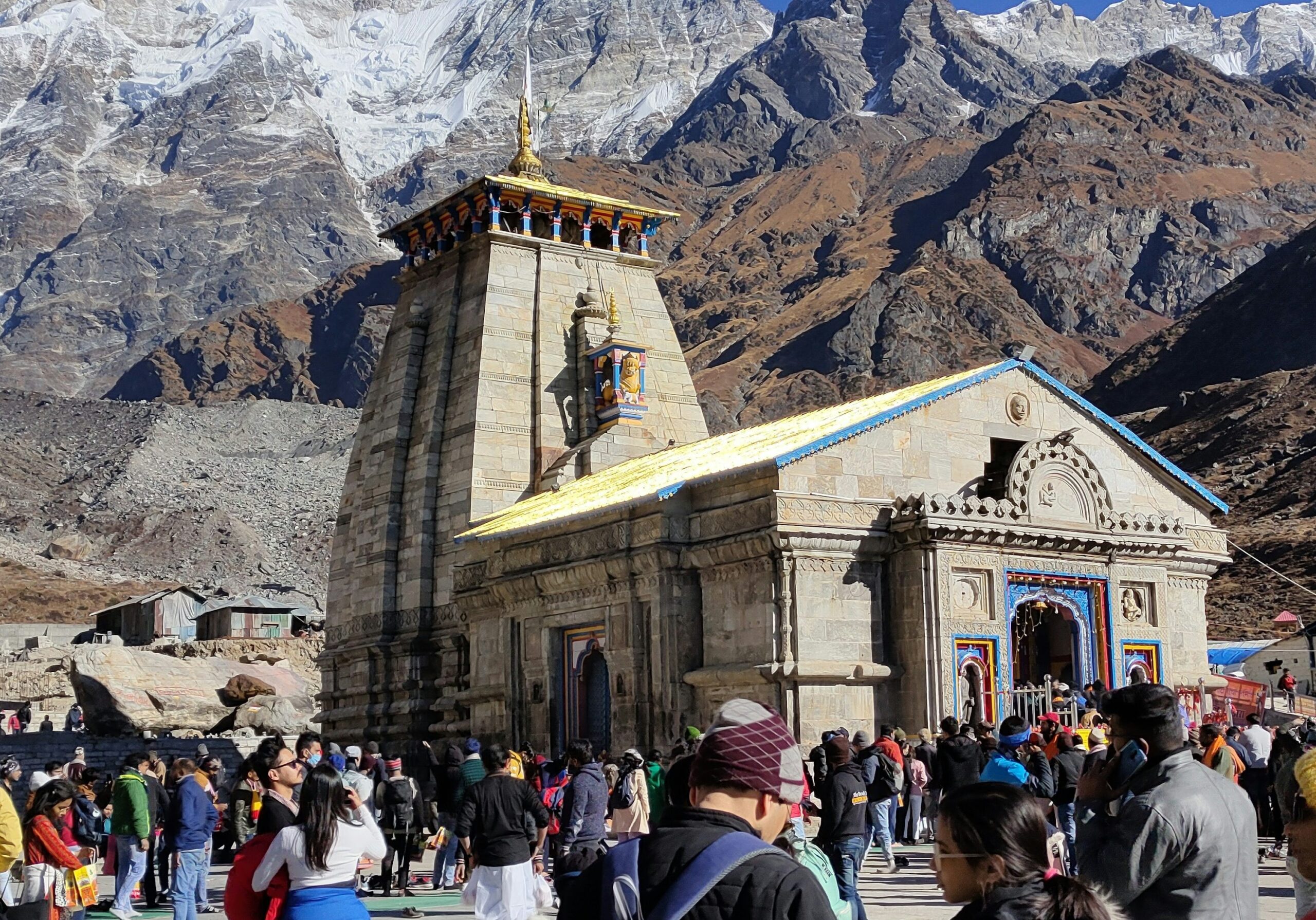
Kedarnath Dham
- Deity: Lord Shiva
- Winter Abode: Shri Omkareshwar Temple (Ukhimath)
- Trek: 22 km (Gaurikund to Kedarnath)
- Nearest Helipad: Kedarnath (.5 km walk to Kedarnath Temple)
- Altitude: 3,580 m (11,744 ft)
- Distinction: The north-most of the 12 Jyotirlingas
To Visit: Sonprayag, Shankaracharya Samadhi, Bhairavnath Temple, Chorabari Lake, Gaurikund, Triyuginarayan, Kedarnath Temple, Agastyamuni, and Ukhimath.
Peaks In Vicinity: Kedarnath Main, Kedarnath Dome, Thalaysagar, Shivling, and Meru.
Kedarnath Dham is one of the most revered temples of Lord Shiva, which echoes with the sounds of ‘Har-Har Mahadev’ and ‘Om Namah Shivay.’ This shrine is said to have been built by Pandavas (the five brothers from Mahabharata). After taking the form of a bull, Lord Shiva went inside Prithvi (Goddess Earth). The Pandavas offered prayers here and the remaining 4-Kedars as a penance for their sins in the battle of Mahabharata.
Kedarnath Dham becomes the third stop for pilgrims on the Char Dham Yatra. Here you see the Mandakini River flow out of its source nearby. Like Pandavas were free of guilt and sins, devotees visit Kedarnath Temple with the same fate in mind. Their faith takes them on this trek. Their faces have no visible stress, only hope.
Badrinath Dham
- Deity: Lord Vishnu
- Winter Abode: Narshimha Temple (Joshimath)
- Trek: 0 km (Road goes up to Badrinath Dham)
- Nearest Helipad: Badrinath (1 km walk/drive to Badrinath Temple)
- Altitude: 3,100 m (10,170 ft)
- Distinction: Is one of the Char Dhams by Adi Shankaracharya
To Visit: Bheem Pul, Vyas Gufa, Tapt Kund, Narada Kund, Shri Badrinath Ji Temple, Vasudhara Falls, Saraswati River, Brahma Kapal, and Yog Dhyan Badri.
Peaks In Vicinity: Neelkanth Peak, Nar and Narayan Mountain Ranges, Mana, Kamet, Mandir Parbat, and Deoban Peak.
Badrinath Dham is the place of worship of Lord Vishnu, the protector of life in Hinduism. This temple is the 4th Dham that devotees visit in the Chota Char Dham Yatra, but also one of the Char Dhams suggested by Adi Shankaracharya. Lord Vishnu came to meditate here, and Lakshmi Ji (Goddess of Wealth) followed suit to give him shade as a Badri tree. Another story that explains the origins of this pious temple is that it’s the ashram of Nar and Narayan, the avatars of Lord Vishnu.
Millions of devotees visit this shrine every year. Badrinath blesses them with the view of its black stone idol, one of the Swayam Vyakta Kshetras. Devotees compulsorily take a dip in the Tapt Kund, which has many medicinal benefits apart from the religious ones. The Badri-Kedar festival and the Murti Ka Mela are occasions when Badrinath is flooded with crowds.